

ERP for computer shops
Computer shops often sell a mix of boxed products, configurable systems, accessories and services. A buyer needs to know whether the exact configuration promised is the one delivered, and whether the shop can find that transaction later for support. Datrylo connects customer records, sales, purchasing, inventory and invoices so teams can work from shared information.
A quoted 16 GB computer becomes a 32 GB revision
See how the workflow connects people, records and decisions.
| Step | Owner, record and exception |
|---|---|
| 1 | Sales quote PC-16 includes one 16 GB computer at 700,000 IQD and identifies the requested model and customer. |
| 2 | Customer requests 32 GB before confirmation. Sales issues PC-32 at 750,000 and retains the superseded quote reference. |
| 3 | Warehouse finds only a 16 GB unit. Sales holds dispatch until the revised specification is available or the buyer explicitly accepts an alternative. |
What belongs in the rollout
Inspect the underlying records
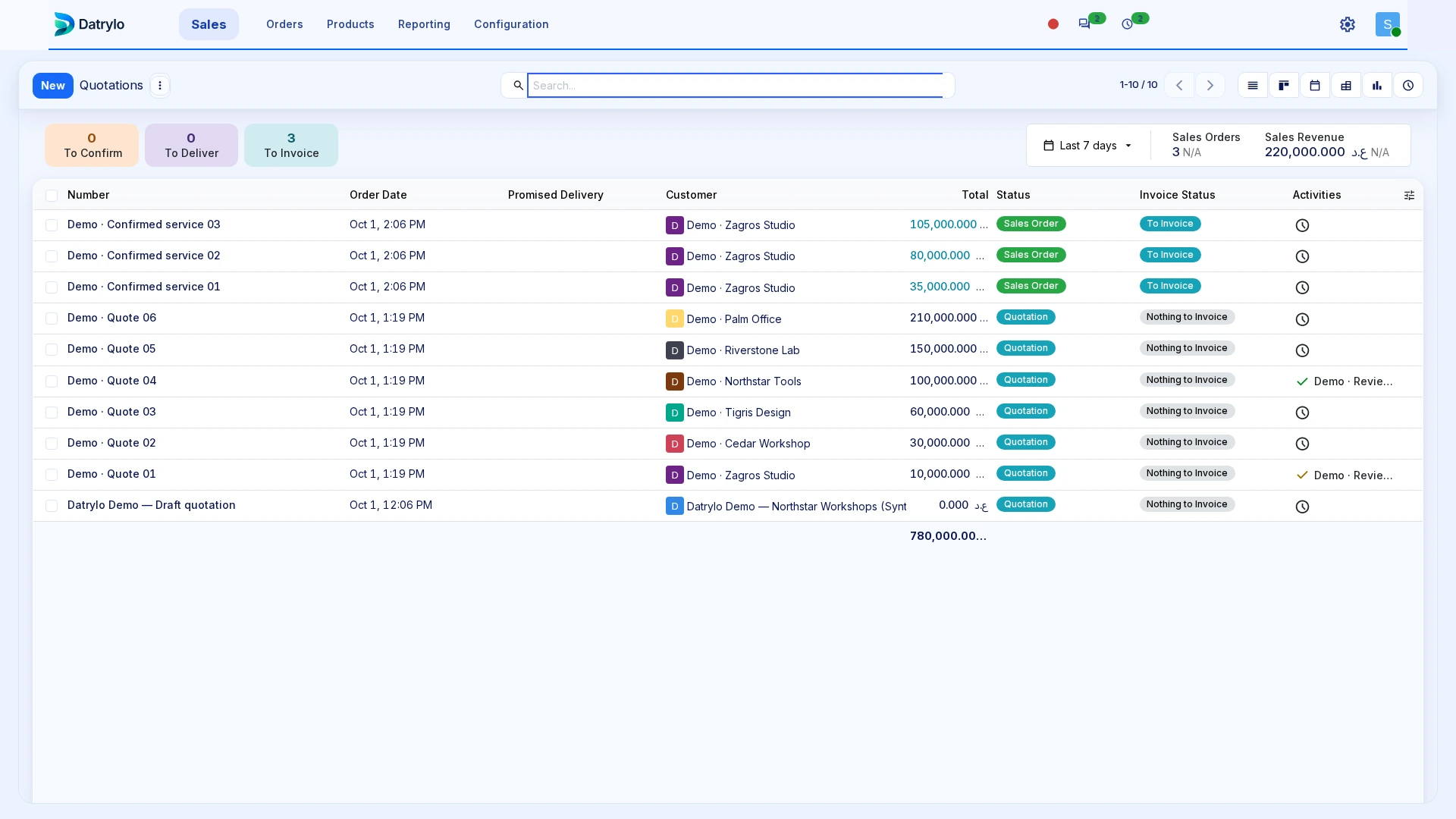
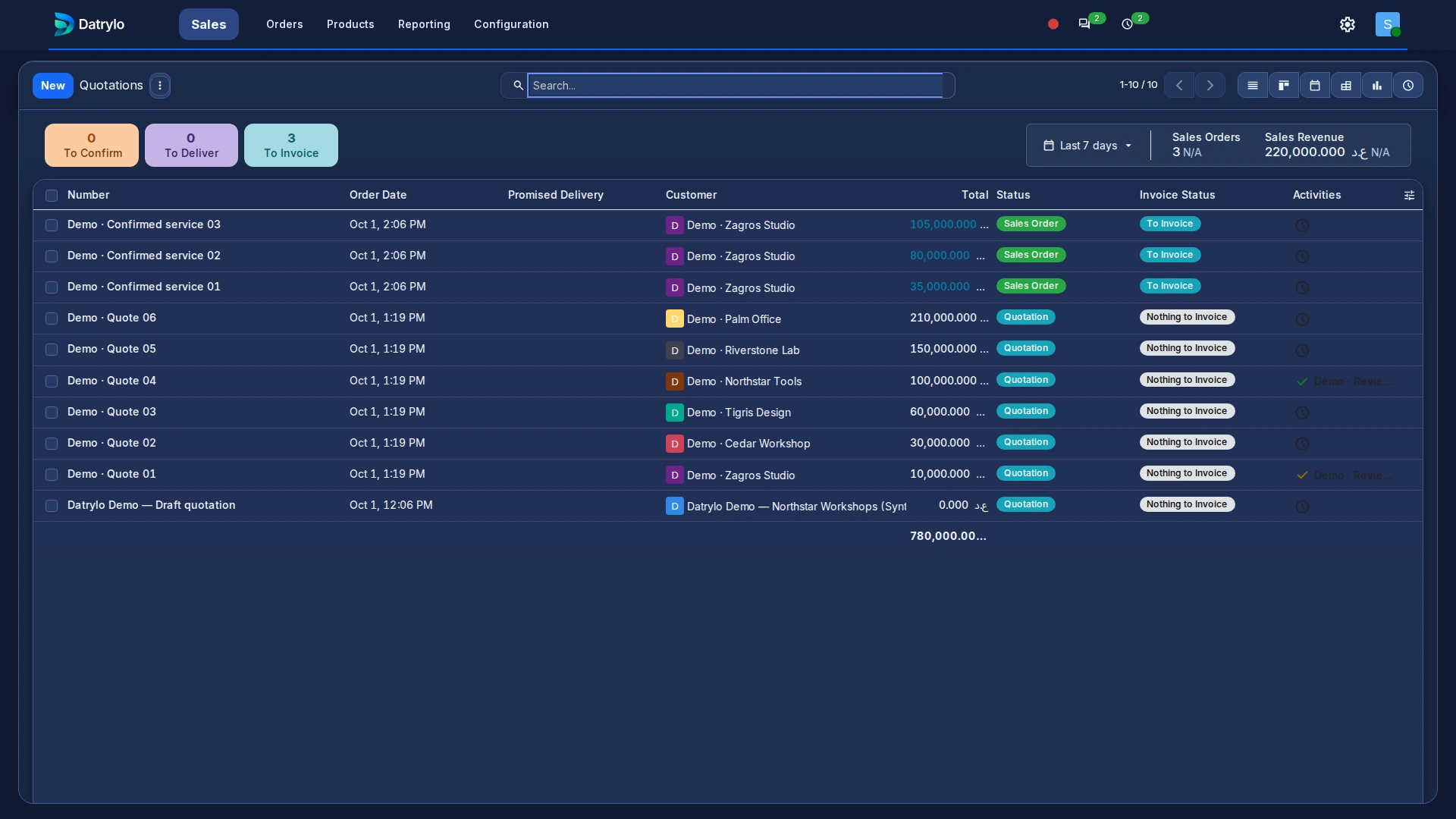
Explore Datrylo in action. Select an image for a closer look.
A finished laptop, a component and an assembled PC are different workflows.
A customer buying a boxed laptop normally needs a retail transaction and the correct device identity. A customer buying a graphics card needs the right specification and available stock. A customer asking the shop to build a PC also creates a work commitment: components must be selected, reserved, assembled and checked before the finished system is handed over.
Choose the simplest model that represents the physical work.
A bill of materials and a retail bundle are not interchangeable. Demonstrate what should happen to component stock and cost before adopting either approach.
Make specifications usable without creating an unmanageable catalogue.
Processor, memory, storage and graphics specifications matter to a computer buyer. Some define a separately stocked configuration; others are descriptive information about a fixed model. Product variants can represent real sellable combinations, but generating every theoretical combination can make product selection harder than the original spreadsheet.
Test a configurable order
Choose a laptop or desktop sale with options such as memory, storage and accessories. Record the offer, confirm it, check availability and deliver the agreed items. If the business assembles systems, test a bill of materials and production order with the exact components.
Keep support context
Ask what staff need to see when a customer returns with an issue: product identity, sale date, serial number, accessories and prior work. Service intake, diagnosis, parts use and supplier warranty claims must be assessed separately.
Prepare for rollout
Clean product variants and supplier codes before import. Decide whether counter sales and quoted business orders share the same stock and pricing rules. Test a partial bundle and a returned component. Review a computer-shop scenario.
Bring the exception to your workflow review
Agree model/variant references, quote revision, assembly responsibility and serial recording on delivery.