ERP for general trading companies
A general trading company may source and sell many unrelated product lines. The hard part is maintaining dependable customer, supplier, product and stock records while each team sees the same transaction. Datrylo connects customer records, sales, purchasing, inventory and invoices so teams can work from shared information.
A mixed order needs two different delivery dates
See how the workflow connects people, records and decisions.
A mixed order needs two different delivery dates| Step | Owner, record and exception |
|---|
| 1 | Sales order GT-02 requests 10 pumps and 20 fittings from two suppliers. Each line retains its product unit and promised date. |
|---|
| 2 | Purchasing links PO-P for pumps and PO-F for fittings to demand. Warehouse receives all 20 fittings but only 8 pumps. |
|---|
| 3 | Sales agrees a partial shipment of 8 pumps plus 20 fittings; 2 pumps remain due. Buyer confirms the second supplier receipt instead of closing the purchase early. |
|---|
What belongs in the rollout
Inspect the underlying records
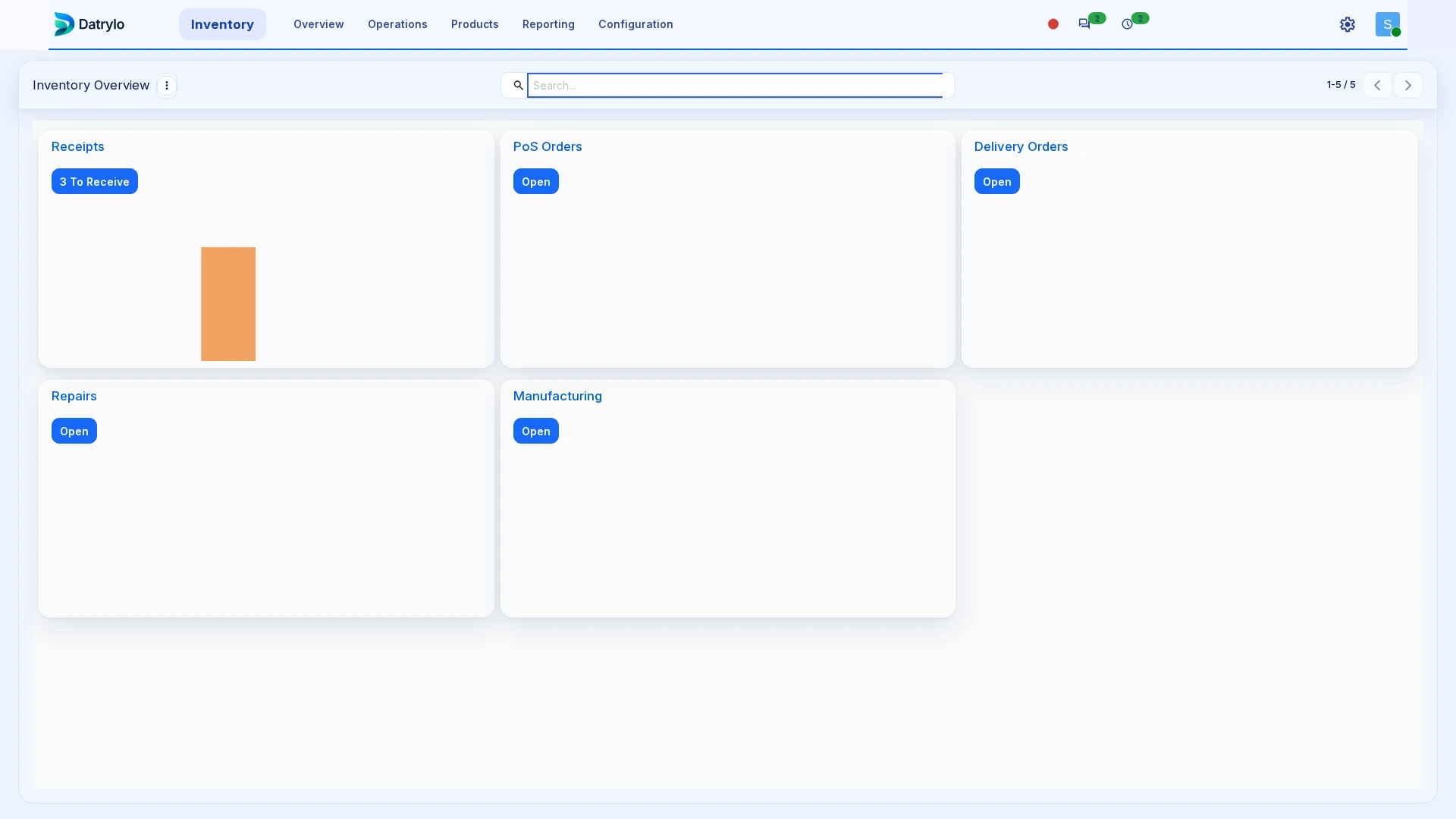
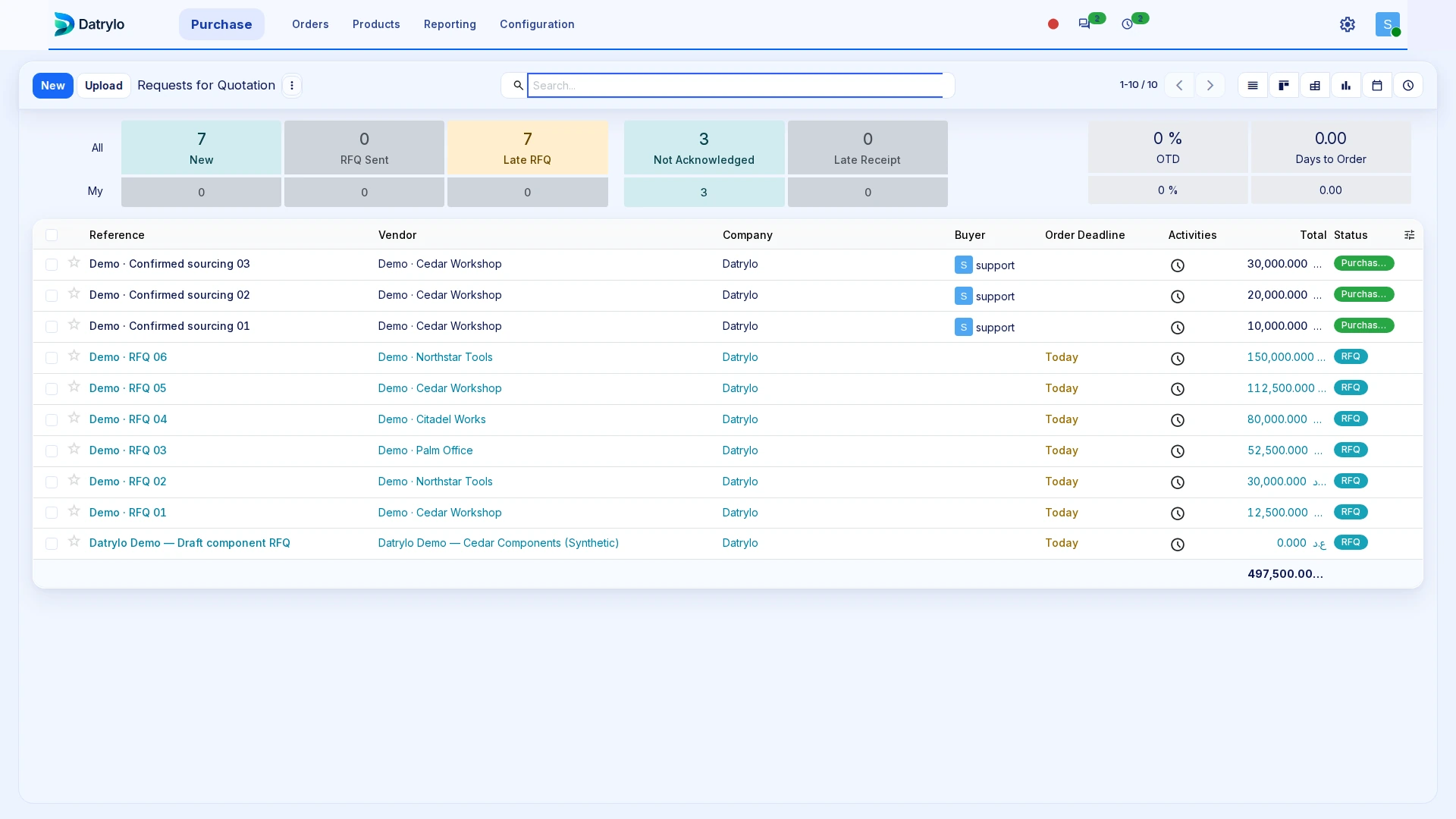
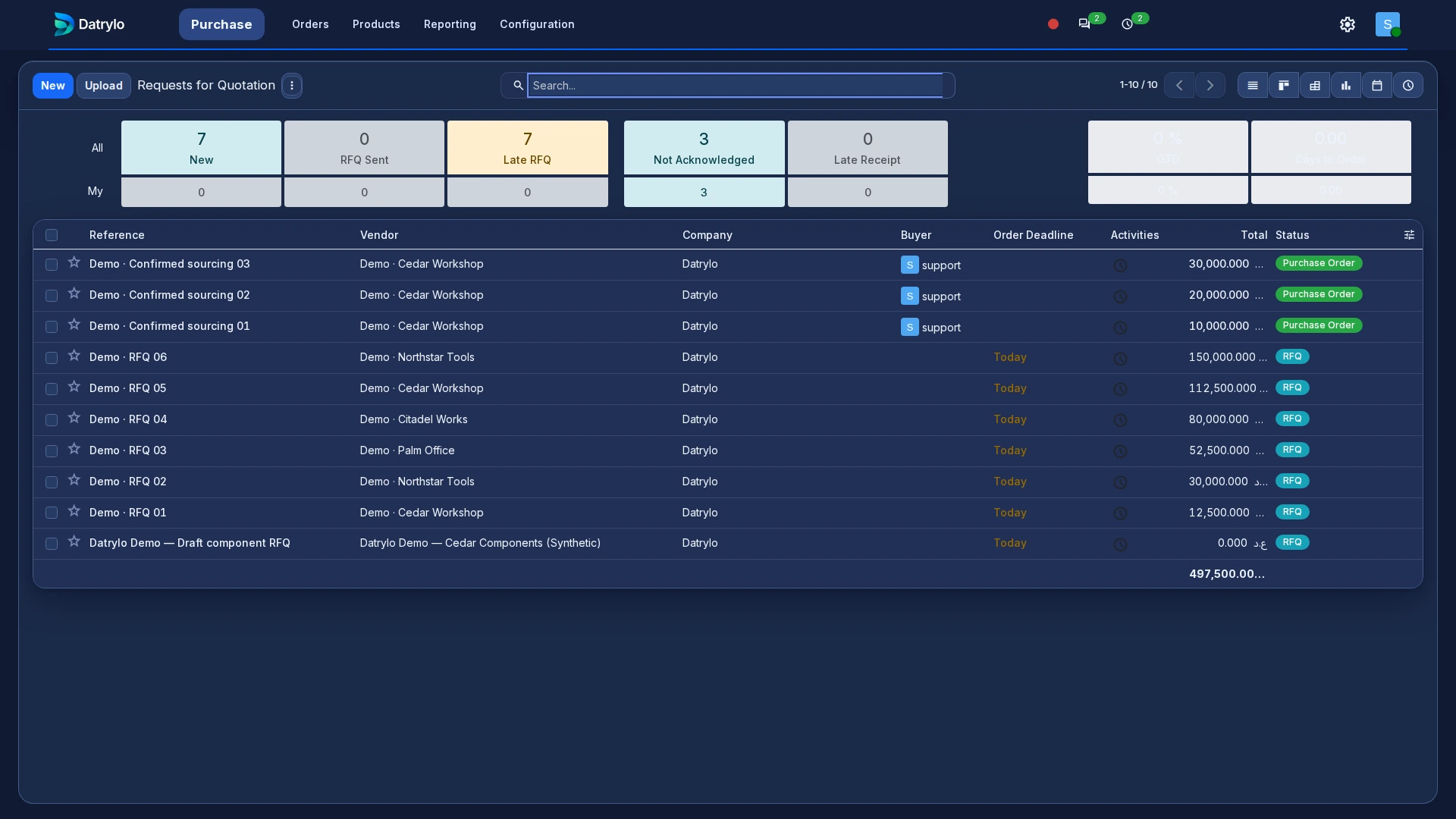
Explore Datrylo in action. Select an image for a closer look.
Different deals should not disappear into one stock figure.
A general trading company might sell stocked electrical items today, source equipment specifically for a project tomorrow and arrange a supplier delivery that never passes through its own warehouse. Those transactions share commercial documents, but they do not share the same fulfilment path. Treating every order as a simple stock sale can create misleading availability, unnecessary purchasing and costs that are difficult to explain.
Choose the fulfilment path before choosing the automation.
A route describes how demand is supplied. It should express a real operational agreement, not be activated simply because a setting exists. Demonstrate the intended documents and stock movements for each model before applying the configuration to the full product catalogue.
Make a quotation an operational commitment.
A useful quotation identifies the actual product or service, quantity, currency, commercial conditions and promised fulfilment. Product variants and internal references help distinguish similar items; a free-text description alone cannot support dependable purchasing or inventory. For B2B trading, decide how supplier specifications, customer references and alternative products are recorded without creating a new duplicate product for each enquiry.
Follow the commercial chain
Start with a customer request and a product that must be sourced. Confirm the supplier order, receive the actual goods, agree the customer sale and deliver it. Review the invoice and payment record.
Decide what varies by product line
Some goods need variants or serial numbers, others expiry dates or special units. Define which rules apply to which catalogue before importing products. Establish who owns supplier changes, price lists, discounts and customer credit decisions. Test a substitution and a partial delivery, not only a straight-through order.
Check your operating structure
If the business has branches or legal entities, determine where records and subscriptions belong. One Datrylo Cluster serves several Workspace databases, each with its own subscription, but cross-database consolidation is not implied by that architecture. Review your trading workflow.
Bring the exception to your workflow review
Configure supplier references, product units, line dates and partial receipt/delivery responsibility.